
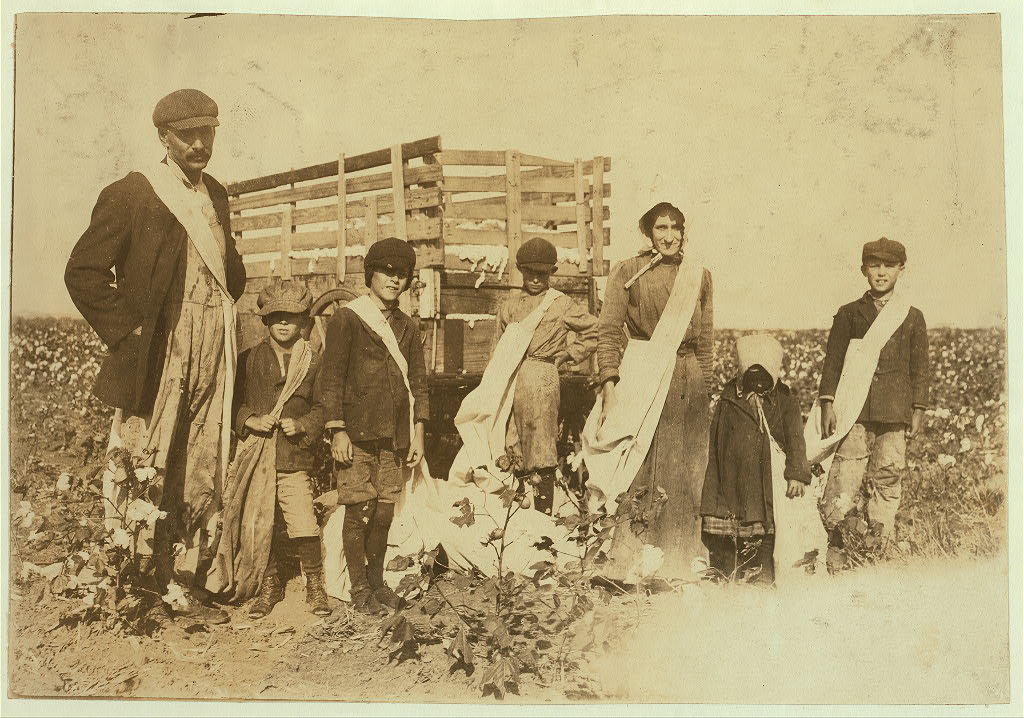
Picking cotton as a family unit was extremely common in the rural South, especially from the late 19th century through the mid-20th century. Driven by the sharecropping system and economic necessity, entire families—including young children—worked fields together to meet production quotas and earn enough to survive, often until mechanization became widespread in the 1950s.
Key Aspects of Family Cotton Picking:
Child Labor: Children as young as 5 to 10 years old frequently worked alongside their parents. Agricultural labor was largely exempt from child labor laws, and every family member’s income was needed.
The Sharecropping System: Under this system, families farmed a landowner’s land in exchange for a share of the crop, necessitating maximum manual labor from all family members to break even or pay off debts.
Seasonal Labor: Picking was a grueling, seasonal task that ran from late summer through the fall, often requiring long hours, from sunrise to sunset.
Transition to Mechanization: Although the mechanical cotton picker appeared in the late 1930s, it was not commonly used until the 1950s, making hand-picking common even into the 1940s.
This lifestyle was a key factor in the economic reality of the Cotton Belt for generations.
The below description and image is taken from the Library of Congress:
Family of L.H. Kirkpatrick, Route 1, Lawton, Oklahoma. Children go to Mineral Wells School #39. Father, mother and five children (5, 6, 10, 11 and 12 years old) pick cotton. “We pick a bale in four days.” Dovey, 5 years old, picks 15 pounds a day (average) Mother said: “She jess works fer pleasure.” Ertle, 6 years, picks 20 pounds a day (average) Vonnie, 10 years, picks 50 pounds a day (average) Edward, 11 years, picks 75 pounds a day (average) Otis, 12 years, picks 75 pounds a day (average) Expect to be out of school for two weeks more picking. Father is a renter. Works part of farm on shares (gives 1/4 of cotton for rent) and part of farm he pays cash rent. Location: Comanche County, Oklahoma. Photo by Lewis Wickes Hine, 1916 October 10.