
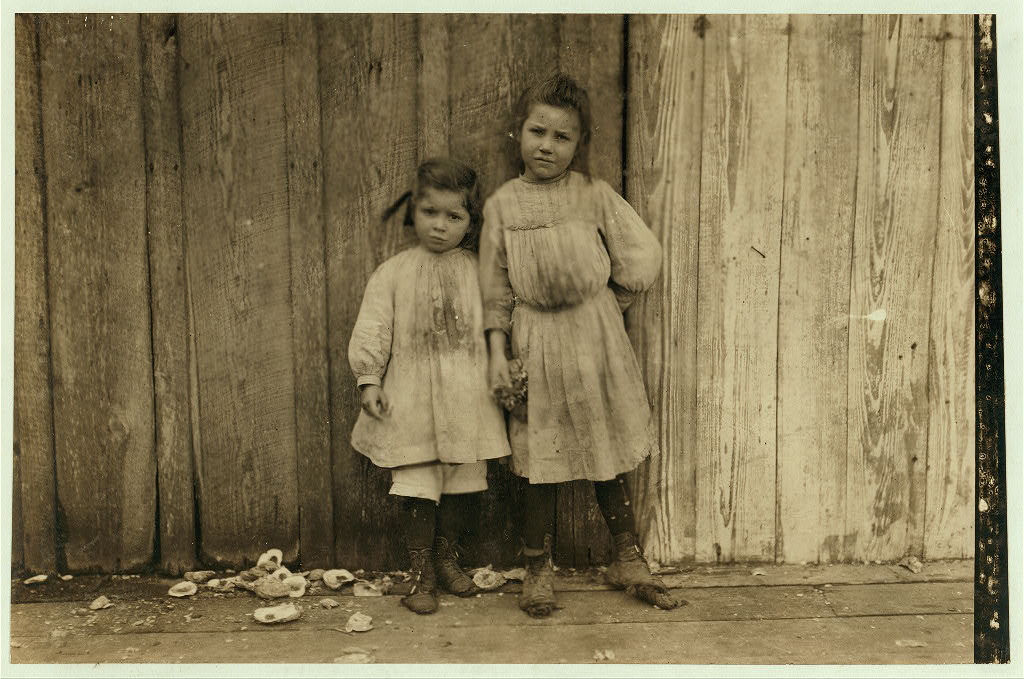
Child shrimp pickers in early 20th-century American canneries, particularly on the Gulf Coast, worked long hours breaking heads off, cleaning, and peeling icy shrimp, often starting before dawn. They worked in harsh conditions, using their bare hands to remove acidic shrimp meat, frequently leaving them with chemical burns, torn skin, and missing fingers.
Key Duties and Conditions:
Cleaning Process: Children, some as young as five, stood at tables to remove heads, peel, and clean shrimp.
Quality Control: They were required to pick through the meat again to remove lingering bits of shell or whiskers.
Physical Toll: The acidic nature of the raw shrimp was notoriously harsh on hands, frequently eating through skin and leading to painful, raw fingers.
Long Hours: Children often worked alongside their parents from early morning until late afternoon, leaving little to no time for education.
Packing and Sorting: Besides picking, children frequently handled the packing of shellfish and, during off-seasons, worked on canning fruits and vegetables.
These children worked in environments lacking safety standards, often serving as a necessary labor force for families trying to make a living in economically depressed regions.
The below description and the image is from the Library of Congress
Maud Daly, five years old. Grace Daly, three years old. Pick shrimp at the Peerless Oyster Co. Their mother said they both help, and their sister said the little one worked the fastest. Many little ones like them work here. Location: Bay St. Louis, Mississippi. Photo by Lewis Wickes Hine, 1911 March.